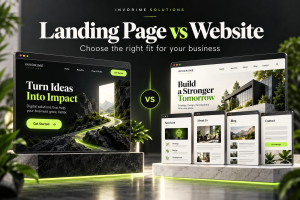
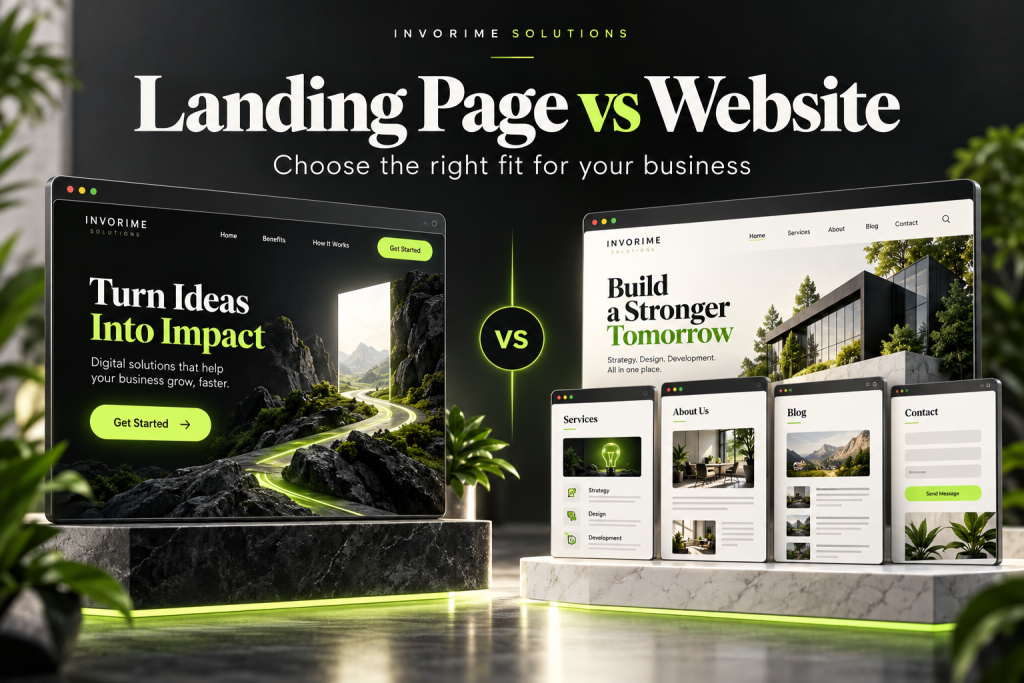
Landing page vs website: which does your business need? Choose a focused landing page when you want a specific audience to take one clear action. Choose a broader website when visitors need to explore your services, learn about your business, and compare their options. Many businesses benefit from both.
The right choice starts with your customer’s next step, not the number of pages you can build. This guide from Invorime Solutions explains the differences, practical use cases, and questions to answer before investing in design.
What is a landing page?
In the broadest sense, a landing page is any page someone arrives on. In campaign planning, the term often means a dedicated page built around one offer and one main action, such as requesting a quote, booking a consultation, or registering for an event.
That distinction matters. A homepage can be the destination of an advertisement, but a dedicated campaign page can give the visitor a more focused explanation of the exact offer that attracted them.
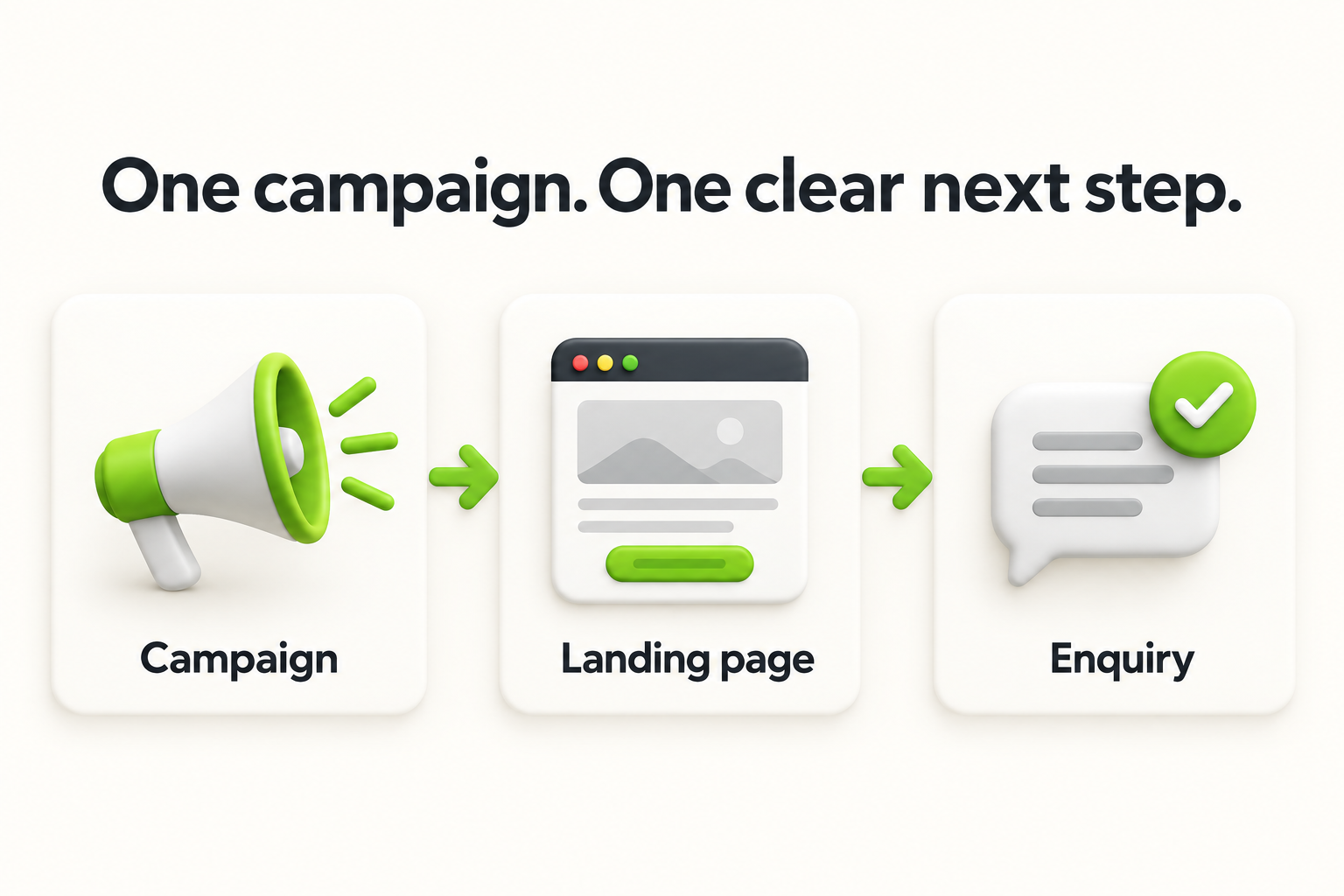
A useful landing page usually includes a clear headline, relevant benefits, credible supporting evidence, answers to likely objections, and a simple way to act. It may repeat the same call to action as the visitor reads. Keep essential contact, privacy, and trust information accessible even when the page has limited navigation.
What is a business website?
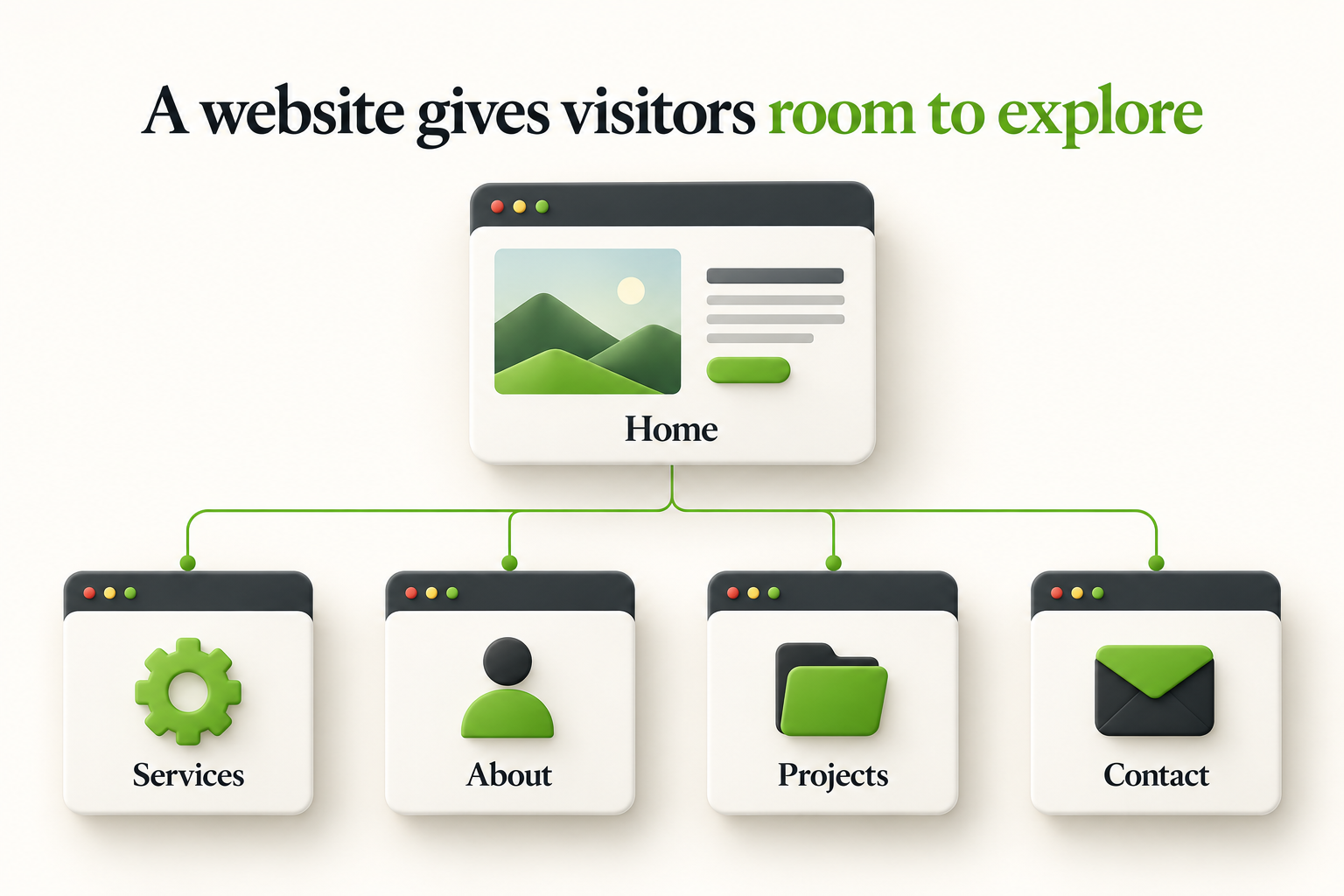
A business website is your wider online presence. It can contain a homepage, service or product pages, an about page, projects, articles, and contact information. Each page has a role, and navigation helps visitors move between them.
Not every visitor arrives ready to enquire. Some need to understand what you do; others want examples, background, or answers to detailed questions. A well-organized website supports those different needs without forcing everyone through the same path.
Landing page vs website: the main differences
Purpose
A campaign landing page focuses on one offer and a primary action. A website explains the broader business and supports several journeys. Both should help visitors make an informed decision.
Content and navigation
A landing page keeps the information closely tied to its offer. A website distributes information across related pages and gives people ways to explore. Less navigation can help maintain focus, but removing useful information is not a substitute for clear design.
Traffic sources
Campaign pages are often used for advertisements, email promotions, and targeted social campaigns. Websites also serve people arriving through referrals, direct visits, and search. Either type of page can receive different kinds of traffic; the important point is whether its content matches the visitor’s expectations.
Measurement
For a landing page, you might measure completed registrations or qualified enquiries from a campaign. For a full website, you may also review service-page engagement, navigation paths, and enquiries across multiple entry points. Decide which outcomes matter before launch.
When a landing page is the better starting point
A dedicated landing page can be a practical choice when the audience, offer, and desired action are already clear. For example, a design studio promoting a brand consultation could send interested visitors to a page that explains that consultation, who it is for, and how to book.
- A specific campaign: one promotion needs a page that directly explains its message.
- A new offer: you want to introduce a defined service before expanding the wider site.
- An event or download: visitors need details and a straightforward registration or request process.
- An existing website: your main site works well, but a campaign needs more focused content.
Keep the promise consistent from the advertisement to the page. Google Ads’ landing-page guidance recommends matching the page to the advertisement, providing useful original information, and making the next action easy to complete. A focused page still needs a helpful mobile experience and enough detail to answer real questions.
When a full website is the better investment
A full website is often the stronger foundation when your business has multiple services, different customer groups, or a longer buying process. Visitors may need to explore examples and understand your approach before they are ready to contact you.
- Several services: each offer needs its own explanation and relevant examples.
- Research-led buying: customers want background, project details, and answers before enquiring.
- Ongoing publishing: you plan to add articles, resources, or case studies over time.
- A growing business: you need a structure that can accommodate future content and features.
For example, a creative business offering branding, web development, and media services may need distinct pages for each area. You can explore Invorime Solutions’ services and project portfolio to see the kinds of information a wider business presence can organize.
Can a landing page and website work together?
Yes. A dedicated landing page can live within your main website and use the same brand identity. The wider site supports discovery and research, while the campaign page concentrates on a particular offer. You do not automatically need a separate domain or a different platform.
Imagine a business with a website covering several services. It runs a campaign for one service and directs that campaign to a dedicated page. Visitors can understand the offer quickly, while appropriate links provide company information or other details they need to feel confident.
This approach also lets you reuse established design components. Keep the headline and content specific to the campaign rather than duplicating a general service page without a clear reason.
Which option costs less?
A single page with a narrow scope can require less work than a larger website, but page count alone does not determine cost. Custom illustrations, copywriting, booking systems, CRM connections, and testing can make a landing page a substantial project.
Ask for a written scope covering design, content, development, integrations, measurement, revisions, and support. Compare recurring hosting or platform charges as well as the initial fee. Our guide to professional website costs in 2026 explains the main budgeting factors.
A simple decision checklist
Before choosing a landing page or website, answer these five questions:
- What are we offering? One focused offer points toward a campaign page; several distinct services may need a wider structure.
- What should the visitor do next? Name the primary action in plain language.
- What information do they need first? Include enough evidence and explanation to support the decision.
- Where will visitors come from? Match the page to the message and context that brought them there.
- What will we need six months from now? Plan for content updates, additional services, and the people maintaining the site.
If you already have a website, assess what can be improved before commissioning a rebuild. Use our website redesign checklist to review content, mobile usability, and launch requirements.
Common mistakes to avoid
Sending every campaign to the homepage. A general page may leave visitors searching for the offer they clicked. Choose the destination that answers their immediate question.
Giving equal attention to too many actions. A page asking people to book, download, subscribe, and buy at once can feel confusing. Establish a clear priority while keeping necessary information available.
Collecting leads without a follow-up process. Test where form submissions arrive, who responds, and what the visitor sees after submitting. Ask only for information you need at that stage.
Judging success by visits alone. Track completed actions and lead quality. A higher form-submission rate is not automatically better if enquiries are less relevant to your business.
Frequently asked questions
Can a landing page replace a website?
It can cover an initial focused need, especially for one offer. It becomes limiting when customers need several service pages, a substantial portfolio, or ongoing resources. Choose based on the information your audience needs.
Do I need a separate domain for a landing page?
No. A landing page can be part of your existing website. Keeping it there can simplify branding and maintenance, provided your platform supports the required design and functionality.
Can a landing page appear in search results?
Yes, if it is accessible to search engines and eligible for indexing. Its usefulness, relevance, and the broader search context matter; calling it a landing page does not guarantee rankings. Some short-lived campaign pages may intentionally be kept out of search results.
Which converts better: a landing page or a website?
There is no universal winner. Results depend on the audience, offer, traffic source, content, usability, and how you define a conversion. Compare pages serving similar goals and look at the quality of the resulting enquiries.
Choose the right approach with Invorime Solutions
The landing page vs website decision is easier when your business goal is clear. Start with the audience, the offer, and the next action, then choose the structure that supports them.
Planning a campaign page or a new website? Contact Invorime Solutions to discuss your project. Share your main offer, target audience, and what you want visitors to do. We can help define a practical scope for the design and development work.